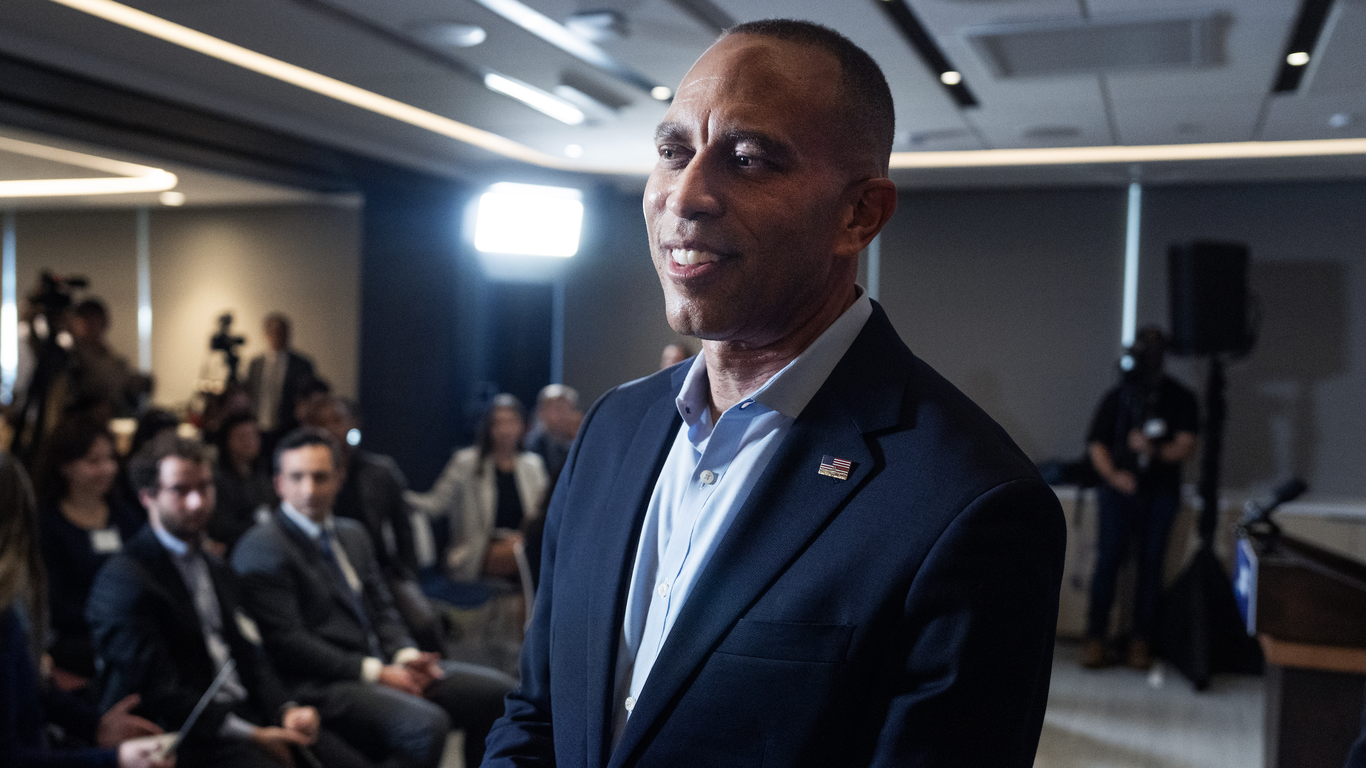
Fresh off significant electoral victories across the country, House Democratic Leader Hakeem Jeffries has officially launched his bid to become Speaker of the House, setting the stage for a critical transition in congressional leadership. In a letter distributed to his colleagues, Jeffries framed the caucus's recent tenure as a model of resilience under challenging conditions, arguing that the party successfully navigated its time in the minority and is now positioned to govern.
"Against all odds, House Democrats were consistently successful in the minority," Jeffries wrote in his letter to lawmakers. "We must now deliver the dramatic change the American people are demanding in the majority."
Yet even as Democrats celebrate their expanded mandate, the formal announcement has immediately reignited long-simmering debates within the party about who should helm the legislative agenda—and what strategy the party should employ against an incoming administration.
Strategic Accomplishments vs. Demands for Accountability
Supporters of Jeffries point to his steady hand as minority leader, highlighting his skill at maintaining unity across a broad political spectrum. Under his stewardship, House Democrats frequently utilized procedural maneuvers like discharge petitions to force votes and managed to hold their coalition together despite narrow margins. Advocates stress that managing a diverse caucus—where progressive groups like the Democratic Socialists of America represent only a slice of the overall membership—requires a pragmatic leader capable of striking balances to pass legislation.
However, critics argue that the party's current leadership apparatus has been far too cautious. For many within the progressive wing and grassroots base, the broader post-election moment demands aggressive oversight and bold legislative pushes rather than traditional decorum. Concerns have emerged over whether traditional party figures possess the stomach to aggressively investigate political opponents or confront difficult policy challenges.
One sharp critique underscored this friction: "He's openly said 'impeachment & getting even aren't priorities'. He will let all the Republicans slide on their bullshit out of some fake decorum and try to move on like normal. It's not about being 'too moderate' it's about him not having the spine to hold these fuckers accountable."
Grassroots Frustration and the Search for Alternatives
Beyond strategic differences over oversight, critics have pointed to party leaders' establishment ties and policy stances on international affairs and campaign finance, arguing that the leadership is out of step with an energized base. The broader discussion surrounding the top House job has led some observers to question whether established figures can project the necessary vigor.
"The reason why people like Senator-elect El-Sayed were elected is because people are tired of this spineless dem leadership," noted one prominent post-election commentary. "For the love of god, someone with a backbone who will actually get shit done."
This desire for a sharper, more combative approach has prompted informal calls for alternative candidates to step forward. Key figures like Representative Alexandria Ocasio-Cortez and Representative Ro Khanna are frequently raised in public discourse as potential standard-bearers for a new era. Yet, political realists point out that the speakership is rarely a springboard for higher ambitions; historically, managing floor votes and taking public heat for difficult compromises can complicate a rising star's future national profile.
The Road Ahead for the Democratic Majority
As the vote for Speaker approaches, Jeffries remains the clear frontrunner to take the gavel, buoyed by the institutional backing of a majority of his caucus. However, the path forward will test his ability to transform electoral gains into meaningful legislative outcomes.
With a divided federal government, any ambitious agenda will require navigating continuous friction between party activists demanding bold action and moderate members focused on swing-district realities. Whether Jeffries can channel the momentum of recent electoral victories into a cohesive governing strategy will determine not just the success of the incoming Congress, but the political landscape leading into the next national election cycle.

